Before we talk about concerts, noisy restaurants, shopping centres, family gatherings or whether babies should “get used to noise”, there’s one fact worth understanding.
Noise-induced hearing damage can be permanent.
You can protect your hearing and manage hearing loss, but once the delicate sensory structures inside the inner ear have been permanently damaged by excessive noise, the human body doesn’t simply grow them back. For a baby, that matters enormously. A child potentially has 80 or 90 years of listening ahead of them, including school, music, headphones, concerts, sport, machinery, traffic, work and thousands of other noisy environments throughout their life.
Protecting a baby’s hearing isn’t about being an overprotective parent or trying to raise them in silence. It’s about protecting something they’ll need for the rest of their life. Here are six things worth knowing.
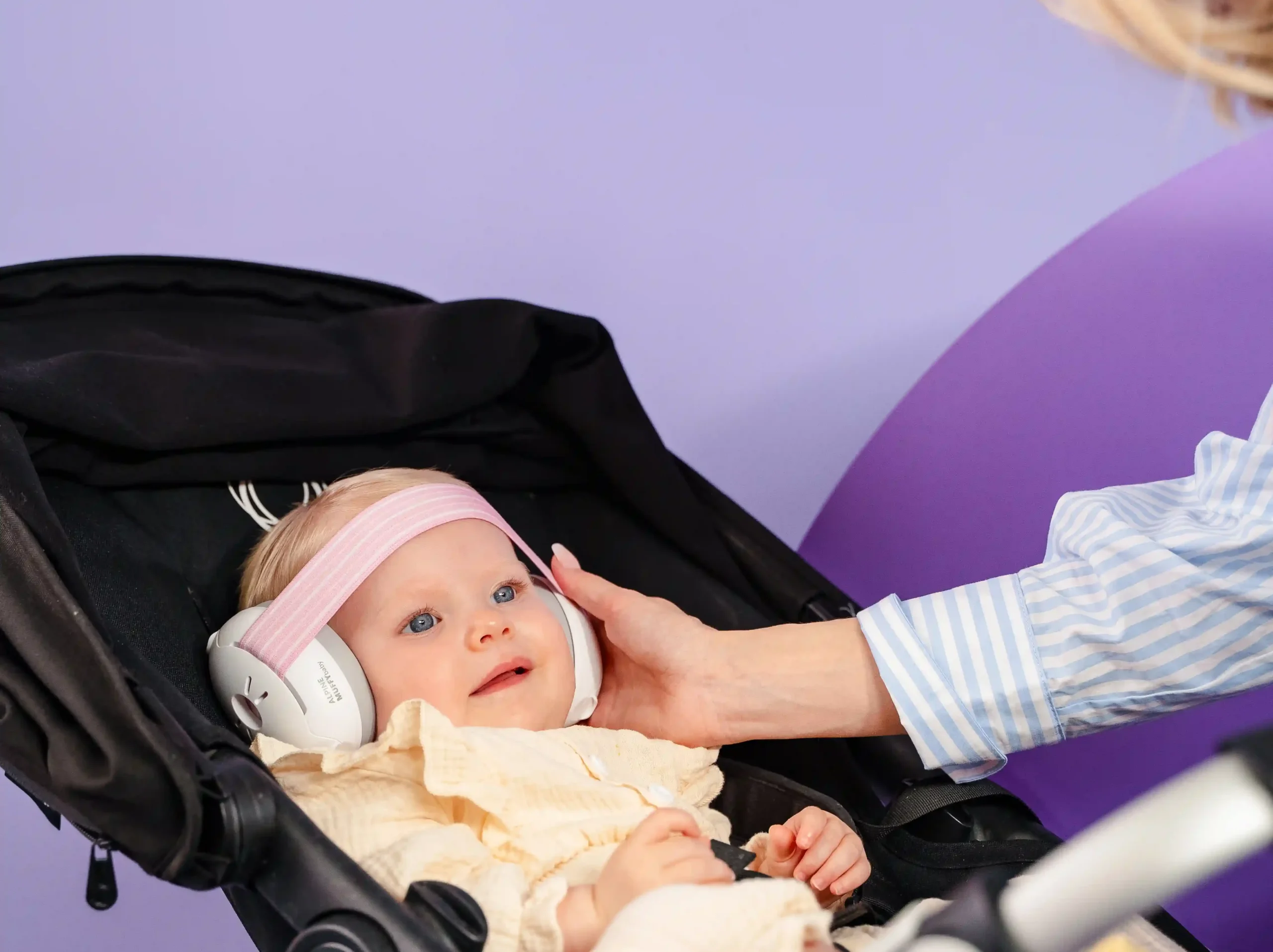
1. Baby ears are still developing, and hearing damage doesn’t grow back
Those little ears have a lifetime of work ahead of them.
Babies are born able to hear, but their auditory system isn’t simply a miniature, finished version of an adult’s. The pathways responsible for carrying and processing sound continue developing through infancy and childhood. Babies and young children also have much smaller ear canals and different acoustic characteristics from adults, which is one reason we shouldn’t simply take noise standards developed for adult workplaces and assume they apply neatly to babies.
The American Academy of Paediatrics specifically recognises infants and young children as having particular vulnerabilities to excessive noise. There’s another obvious vulnerability too: babies can’t manage their own exposure. An adult who finds somewhere uncomfortably loud can move away from a speaker, leave the room or put on hearing protection. A six-month-old strapped into a pram can’t tell you that something is too loud and certainly can’t walk outside.
Inside the inner ear is the cochlea, containing thousands of tiny sensory hair cells involved in converting sound vibrations into signals the brain can understand. Excessive noise can damage these delicate structures. Once human cochlear hair cells have been permanently damaged or destroyed, our bodies don’t simply replace them. Noise-induced hearing loss can therefore be permanent.
Damage can also accumulate over time. It doesn’t necessarily take one spectacularly loud event. Repeated excessive noise exposure throughout life can contribute to hearing loss, which becomes particularly relevant when that life has barely begun. A baby potentially has another eight or nine decades of noise exposure still ahead.
Hearing loss isn’t simply about needing to turn the television louder either. Hearing plays an important role in communication, speech and language development, learning and social interaction. Significant hearing loss can involve hearing assessments, audiologists, specialist appointments, hearing aids or other assistive technology, together with potentially years of associated costs.
A scraped knee heals, and a broken bone can mend. Permanently damaged sensory structures inside the inner ear are another matter. A child doesn’t receive a fresh pair of ears at eighteen, which is why prevention matters from the beginning.
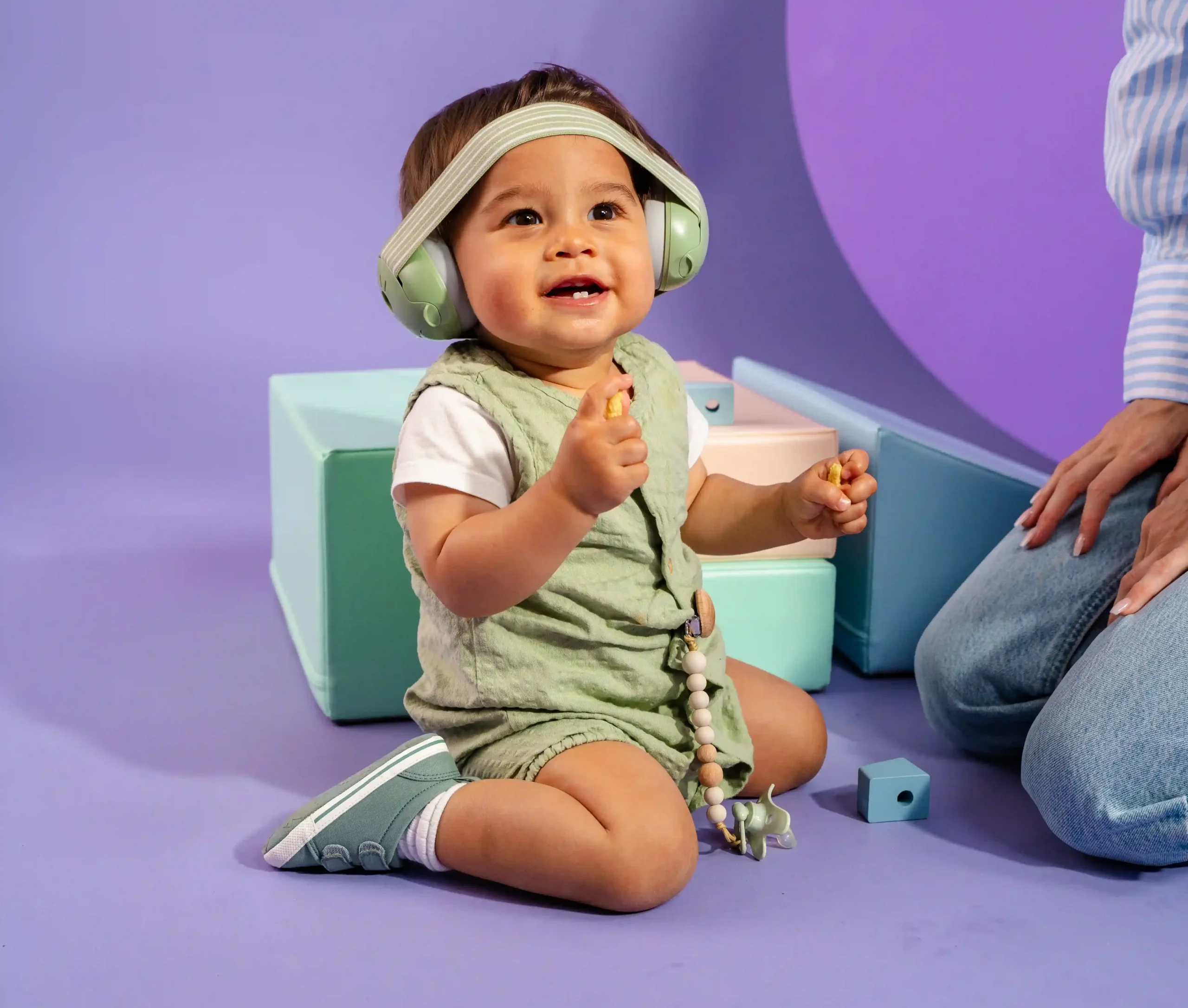
2. Genuinely loud environments can damage hearing.
If adults think it’s seriously loud, don’t ignore what your baby is hearing.
Concerts, music festivals, air shows, motorsport, fireworks, sporting events and loud live music can all reach sound levels capable of damaging hearing. These are the situations where baby hearing protection moves beyond simply making an environment more comfortable and becomes a genuine hearing-safety consideration.
Noise exposure isn’t about one magic number either. The risk depends on how loud the sound is, how long the exposure continues, how close you are to the source and how frequently that exposure happens. As the sound level increases, the amount of time it takes for that exposure to become potentially harmful decreases.
Again, adults can usually manage this for themselves. If you’re standing near a concert speaker and your ears are uncomfortable, you can walk somewhere quieter. At motorsport, you can put hearing protection on or move further away. If you’ve had enough, you can leave. Babies don’t have those options and rely entirely on the adults around them to manage their exposure.
That doesn’t mean parents need to stop taking babies anywhere interesting. Take them travelling, to sporting events, festivals and family adventures. But if you’re deliberately going somewhere you already know will be seriously loud, proper baby hearing protection shouldn’t be an afterthought. Put it in the bag with the nappies.
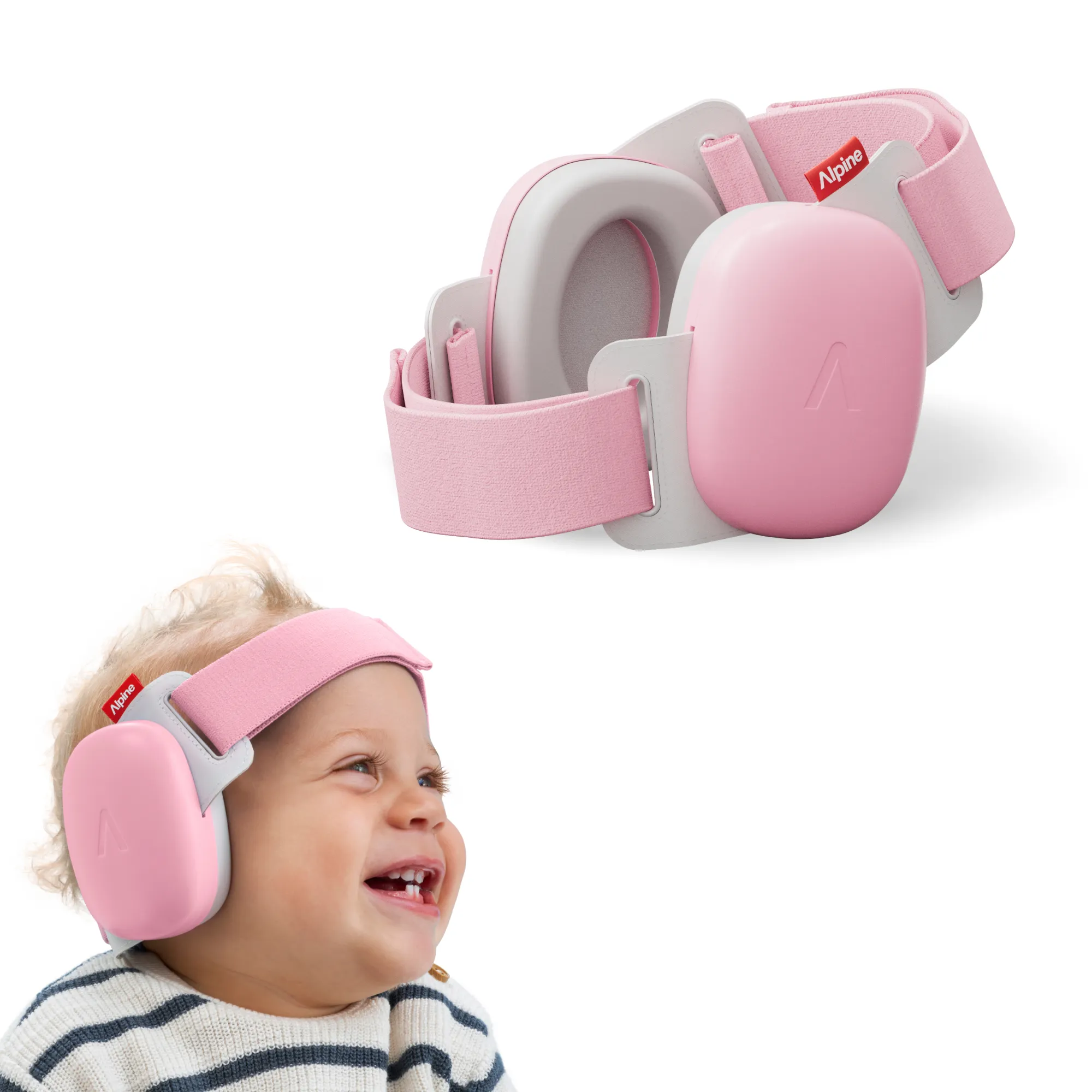
3. “They need to get used to noise” gets the science muddled
Getting used to a sound doesn’t make the sound safer.
“Don’t protect them too much. They need to get used to noise.” It’s one of the most persistent arguments around babies and noise, and there is a small piece of truth buried inside it. Babies absolutely need sound. They need to hear their parents talking, voices, language, laughter, music and the normal sounds of everyday life. Their developing brains are constantly learning to recognise, locate and interpret what they hear.
Nobody is suggesting babies should live in silence. But there’s a massive difference between allowing a baby to experience normal life and deliberately exposing them to excessive or unnecessary noise because it will supposedly make their ears tougher. It won’t.
Babies can become accustomed to familiar sounds through a process called habituation. Their brains learn that a repeated stimulus isn’t particularly important, so they may eventually react less strongly to it. But habituation isn’t immunity. A baby that eventually stops startling at a particular loud sound hasn’t developed stronger ears. The brain’s response has changed, but the sound reaching the ear hasn’t.
If a sound is loud enough to be potentially harmful, becoming accustomed to it doesn’t magically make it safe. We don’t deliberately expose babies to increasingly powerful sunlight because their skin needs to “get used to UV”. We allow them to experience sunshine while sensibly managing excessive exposure. Hearing deserves the same common sense.
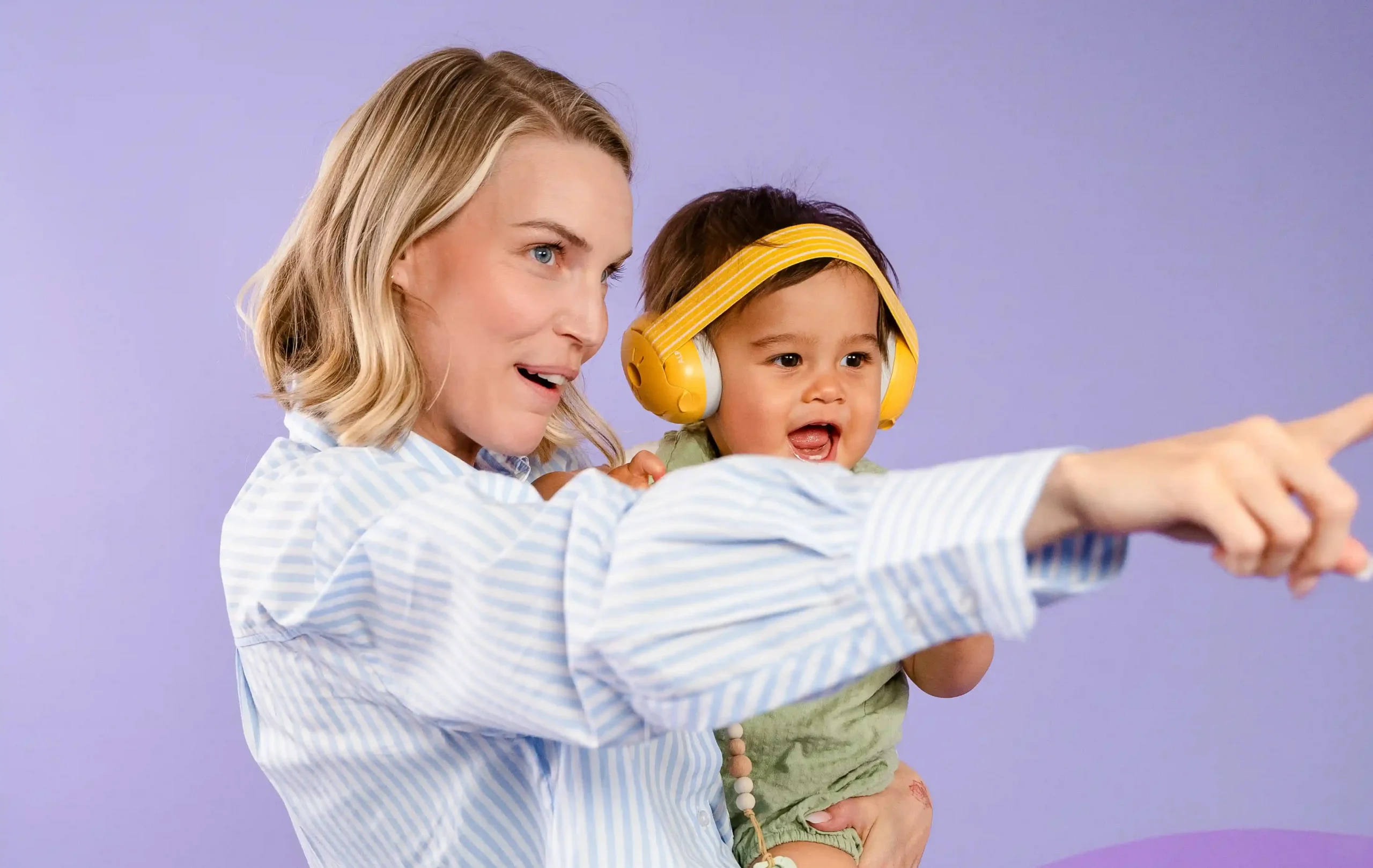
4. Not every noisy place will damage hearing.
“Not dangerous” and “comfortable” are two completely different things.
Not every situation where baby hearing protection can be useful involves dangerous noise levels. Think about a big family gathering. Twenty people are talking, children are shouting and playing, there’s music in the background, plates and glasses are clattering, and everyone gradually starts talking louder because everyone else is talking louder.
The same thing happens in packed shopping centres, busy restaurants, airport terminals, weddings and large indoor events. We shouldn’t pretend every one of these environments is damaging your baby’s hearing, because often it isn’t. But that doesn’t automatically make it a comfortable sound environment either.
Noise can affect us long before it reaches levels associated with permanent hearing damage. Adults understand this instinctively. Walk out of a packed restaurant or noisy shopping centre into a quiet street and you immediately notice the difference. Sometimes you don’t realise how much background noise you’ve been processing until it disappears.
A baby experiences that environment too. Sometimes there’s simply no reason they need the full blast of everything happening around them. This is where baby hearing protection can serve a different purpose. You’re not necessarily protecting against permanent hearing damage. Sometimes you’re simply reducing an unnecessarily noisy environment to something more comfortable.
5. Sleep doesn’t switch your baby’s ears off.
Sleeping through noise isn’t necessarily the same as sleeping undisturbed.
Every parent knows the situation. You’ve finally got the baby asleep and you’re at a family lunch, walking through a shopping centre, sitting at an airport or having dinner with friends. Then somebody drops a plate, a toddler starts screaming or the table next door suddenly erupts with laughter.
The sleeping brain doesn’t completely stop processing the outside world. Environmental noise can cause movements, brief arousals and awakenings. Importantly, a baby doesn’t necessarily have to wake completely and start crying for noise to have disturbed their sleep.
That’s why reducing environmental noise can be useful even when the surroundings are nowhere near loud enough to damage hearing. This isn’t about claiming that earmuffs magically make babies sleep. Anyone who’s spent time with a baby knows they’re not quite that cooperative. Noise is simply one environmental factor parents can control.
If your baby is asleep in a pram at a busy family gathering, there isn’t much developmental benefit in every burst of laughter, clattering plate and screaming toddler arriving at full volume. Likewise, if you’re walking around a packed shopping centre while they’re sleeping, reducing some of that background racket isn’t depriving them of an important learning experience. They’re asleep.
You’re simply taking the edge off the surrounding noise and creating a more consistent sound environment while they rest.
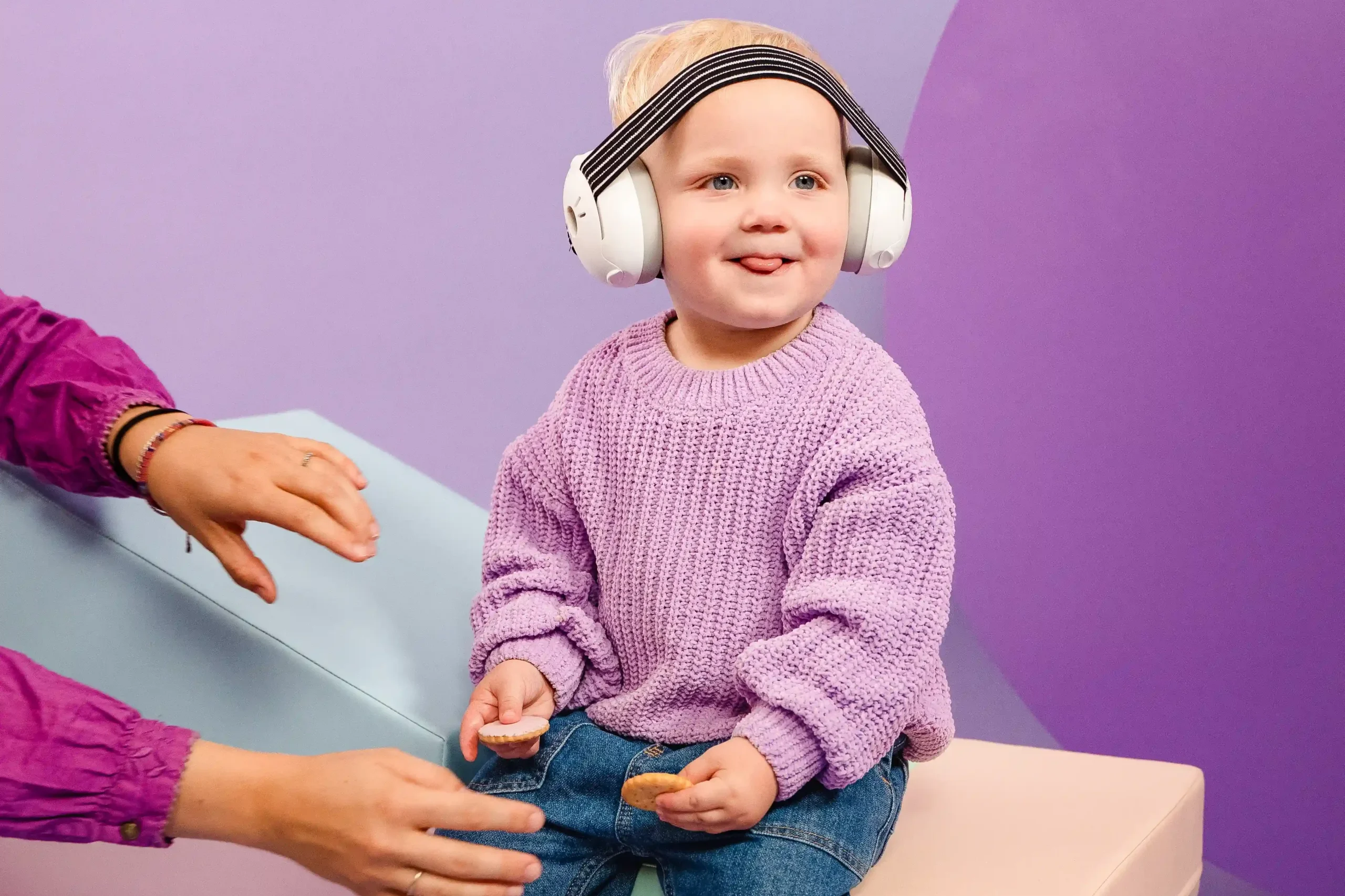
6. Hearing protection isn’t about hiding babies from the world.
Turn the volume down when necessary. Don’t turn the world off.
Baby hearing protection isn’t something that needs to be worn from breakfast until bedtime. Normal sound is important. Talk to your baby, let them hear voices, play music at sensible volumes and let them experience dogs barking, birds chirping, people laughing and all the other sounds that make up ordinary life. That’s how babies begin experiencing and understanding their environment.
Hearing protection is simply another tool parents can use when circumstances change. Sitting at home talking to your baby or having coffee somewhere reasonably quiet doesn’t require hearing protection. At a family gathering that’s becoming increasingly rowdy, however, turning the surrounding noise down a little may make sense. If your baby is asleep while you’re walking through a packed shopping centre or sitting in a noisy restaurant, reducing the background noise may help take the edge off the environment.
Move to a concert, motorsport event, festival, air show or fireworks display, and the purpose changes again. Now hearing protection becomes considerably more important because the sound itself may be capable of causing damage. Different environments call for different decisions.
Sometimes you’re protecting against potentially harmful noise. Sometimes you’re reducing unnecessary background noise. Sometimes you’re simply trying to give a sleeping baby a calmer environment. And sometimes there’s absolutely no need for hearing protection at all.
That’s not being overprotective. It’s simply understanding when to use the right tool.
A simple way to think about it
For normal everyday life, let babies hear and experience the world around them. When things become particularly busy and noisy, there’s nothing wrong with turning the volume down a little. If they’re sleeping somewhere noisy, reducing the background racket can help create a calmer environment. And when you’re heading somewhere genuinely loud, protect their ears properly.
Babies don’t need to be raised in silence, but they don’t need to be “trained” to tolerate unnecessary noise either. They can’t move away from a loudspeaker, tell you their ears hurt or decide they’ve had enough of a noisy environment and walk outside. For those first years, adults make those decisions for them.
They have an entire lifetime to use their hearing, and they only get one set.