The Complete Guide to Motorcycle Helmet Noise and Hearing Protection
Search for the quietest motorcycle helmet and you’ll quickly discover hundreds of reviews, YouTube videos and forum debates.
“This helmet is whisper-quiet.”
“This one changed my life.”
“I’ll never buy another brand.”
The problem is that most riders are asking the wrong question. It’s not whether one helmet is quieter than another. It’s whether any motorcycle helmet is actually quiet enough to protect your hearing.
The answer is no.
Here’s what every rider should know before spending thousands chasing the mythical “quiet helmet”.

Is there really such a thing as a quiet motorcycle helmet?
No.
There are helmets that are quieter than others, but there is no motorcycle helmet that completely eliminates wind noise.
Manufacturers spend huge amounts of time refining aerodynamics, improving visor seals and reducing turbulence. They are into protecting your head first and foremost, and wind noise for them is of less importance. Premium helmets often perform noticeably better than budget models. But once you’re riding at highway speeds, every helmet is exposed to the same thing: air moving past your head at over 100 km/h.
That airflow creates turbulence, and turbulence creates noise. Some helmets reduce it better than others, but none remove it completely.
Why is wind noise louder than my motorcycle?
This surprises many riders. Most people blame loud exhausts or engines for hearing damage, but the biggest culprit is usually wind. As air flows around your helmet, it becomes turbulent. That turbulent air creates constant high-frequency noise around your ears.
In fact, many motorcycles with quiet exhausts still expose riders to damaging noise levels simply because of airflow around the helmet.
It’s the invisible enemy that most riders never think about.

Can a motorcycle helmet protect your hearing?
No. A motorcycle helmet is designed to protect your skull during an impact. It isn’t designed to be hearing protection.
Even some of the quietest premium helmets still allow enough wind noise inside to exceed safe exposure levels during long rides.
That’s why professional riders, police motorcyclists and experienced long-distance travellers wear earplugs regardless of which helmet they use.
Are expensive motorcycle helmets actually quieter?
Usually, yes. But “quieter” doesn’t necessarily mean “quiet”. Premium helmets often feature better shell shapes, improved neck rolls, tighter visor seals and more refined ventilation.
That all helps reduce turbulence. However, even if one helmet is several decibels quieter than another, it may still expose you to enough noise to contribute to long-term hearing damage.
Buying an expensive helmet is a great investment for your head and life. Buying one instead of wearing earplugs isn’t.
Does a helmet fit affect wind noise?
Absolutely. A helmet that’s too loose allows more air to circulate around your ears.
A poorly fitting neck roll can also allow additional turbulence into the helmet. Even changing jackets or riding with a bulky neck warmer can alter airflow enough to change how noisy a helmet feels. That’s why one rider may describe a helmet as incredibly quiet while another thinks it’s noisy.
Fit matters just as much as brand.

Does my windscreen make my helmet noisier?
Very often. One of the biggest sources of helmet noise isn’t the helmet itself. It’s the motorcycle. A poorly positioned windscreen can send turbulent air directly at your helmet.
Ironically, removing a windscreen altogether sometimes creates cleaner airflow than using the wrong one. Adventure bikes are particularly sensitive because riders often sit upright behind adjustable screens. Changing the windscreen by only a few centimetres, or even changing your seating position, can dramatically affect helmet noise.
Are noise-cancelling earbuds good for riding?
Not as good as many people think. Active Noise Cancelling (ANC) is brilliant for predictable sounds like aircraft engines or air conditioners.
Motorcycle wind noise is different. It constantly changes with speed, wind direction and airflow around the helmet. That makes it far harder for ANC systems to cancel effectively.
There’s another consideration too. Many riders find strong noise-cancelling makes them feel disconnected from what’s happening around them.
The goal isn’t complete silence. The goal is reducing harmful noise while still remaining aware of traffic, your motorcycle and the road.
Do motorcycle earplugs block important sounds?
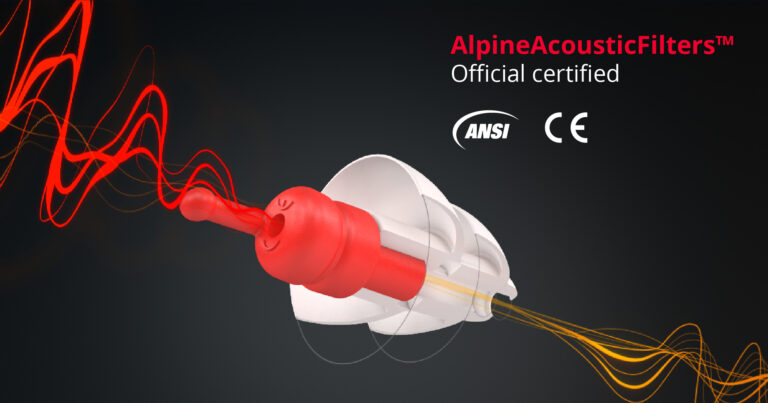
Quality motorcycle earplugs don’t. This is one of the oldest myths in motorcycling. Purpose-designed motorcycle earplugs use acoustic filters rather than simply blocking everything. That means they reduce damaging wind noise while still allowing riders to hear:
- Engine sound
- Traffic
- GPS instructions
- Helmet intercoms
- Emergency sirens
Many riders are surprised that they actually hear more useful sounds once the overwhelming wind noise has been reduced.

Why do I feel exhausted after a long ride?
Wind noise is mentally tiring. Your brain spends hours processing continuous high-volume noise without you even realising it. By the end of the day you’re not only physically tired; you’re mentally drained as well. This is one of the biggest benefits riders notice after switching to proper motorcycle earplugs.
The ride becomes calmer. Concentration improves. You arrive feeling fresher, even after hundreds of kilometres.
What’s the best way to reduce motorcycle wind noise?
There isn’t one magic solution. The best approach combines several things working together. Choose a quality helmet that fits properly. Experiment with your windscreen and riding position. Keep visor seals and neck rolls in good condition.
Most importantly, wear purpose-designed motorcycle earplugs.
No helmet can completely eliminate damaging wind noise on its own.
Even the most expensive helmet still benefits from proper hearing protection.
For most riders, a quality helmet combined with filtered motorcycle earplugs provides the safest, quietest and most comfortable riding experience available today.

Final Thoughts
We happily spend money on jackets, boots, GPS units and luggage because we know they’ll make our rides safer or more enjoyable.
Yet many riders still ignore the one thing they can’t replace.
Their hearing. There may never be such a thing as a truly quiet motorcycle helmet.
Fortunately, there doesn’t need to be. A well-fitting helmet, clean airflow and a good pair of filtered motorcycle earplugs will always beat chasing marketing claims about the next “whisper quiet” lid.
Your hearing has to last a lifetime. Treat it like the essential piece of riding gear that it is.